
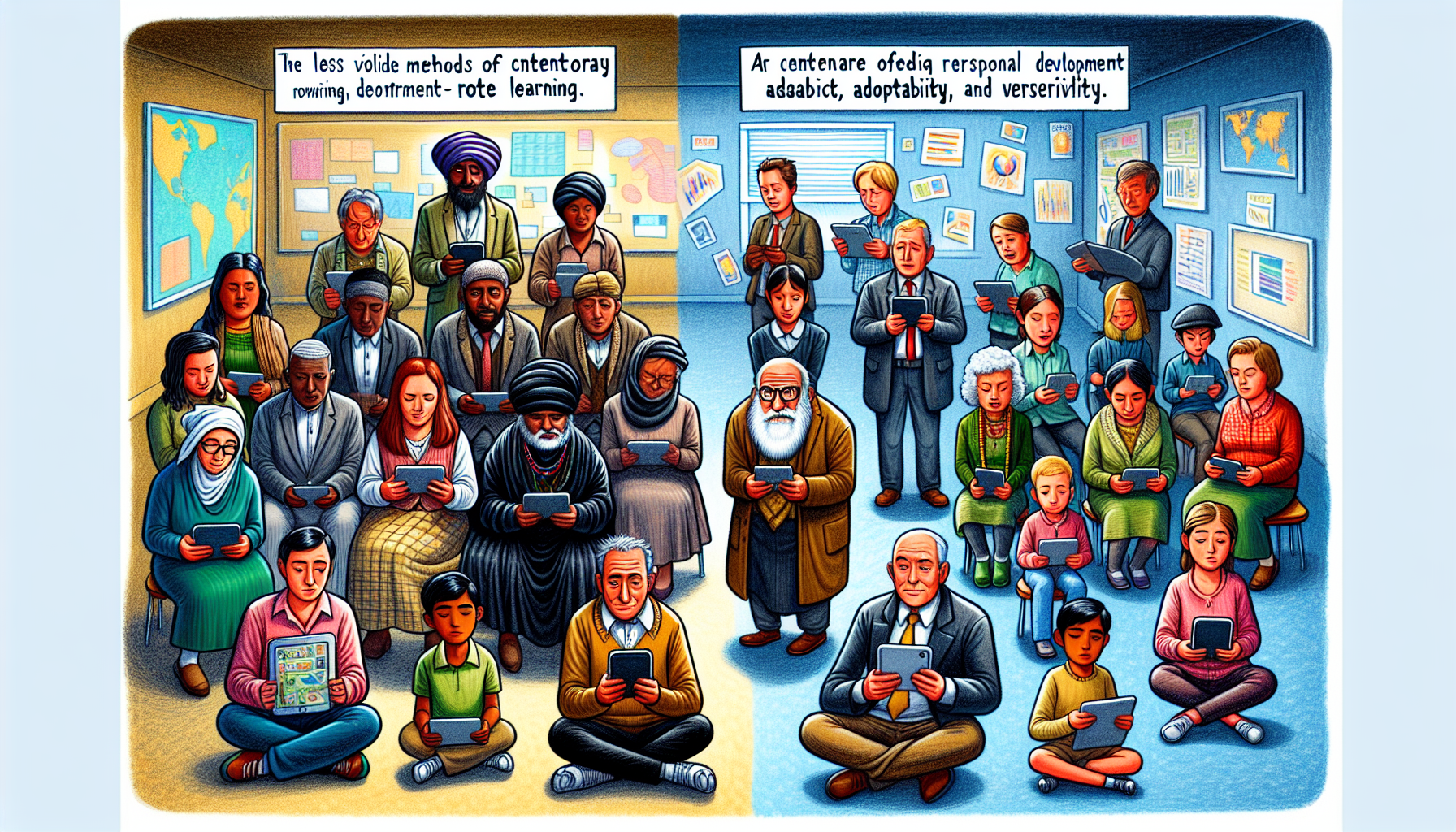
Education is a lifelong journey, not a destination. It is a process of self-enrichment, personal growth, and an essential tool for staying mentally sharp, especially for retirees and pre-retirees. However, the conventional study methods that were once the backbone of knowledge acquisition are now increasingly seen as inefficient, particularly for mature learners. The necessity to reassess and reinvent these traditional educational resources is more pressing than ever.
What’s Wrong With Traditional Study Methods?
Traditional study methods, often defined by rote learning and passive listening, lack the flexibility and adaptability needed for today’s learners. They often fail to engage students, leaving them disinterested and unmotivated. This one-size-fits-all approach can be particularly challenging for older learners, who may have different learning styles, capabilities, and interests compared to younger students. For a deeper understanding of effective study methods, you can read our article on 10 Proven Study Methods for Academic Success.
Moreover, these methods are often disconnected from the practical application of knowledge, making it difficult for learners to see the relevance of what they are learning. This theoretical approach can be particularly frustrating for mature learners who are often looking for practical knowledge and skills that can be applied in real-world situations.
Rethinking Educational Resources and Learning Strategies
In the face of these challenges, it is crucial to rethink our educational resources and learning strategies. The focus should be on creating a more engaging, personalized, and practical learning experience.
Firstly, learning strategies need to be flexible and adaptable to cater to different learning styles and needs. For instance, visual learners might benefit from infographics or videos, while auditory learners might prefer podcasts or audio books. Providing a variety of resources and formats can make the learning process more engaging and enjoyable.
Secondly, learning should be interactive and practical. Learners should be encouraged to apply what they learn, whether it’s through problem-solving exercises, group discussions, or real-world projects. This not only helps to reinforce knowledge but also makes learning more relevant and meaningful.
The Role of Technology in Modern Learning
Technology plays a vital role in revolutionizing educational resources and learning strategies. Online learning platforms, digital libraries, interactive apps, and virtual reality experiences are just some examples of how technology can enhance learning. These platforms provide an array of resources at our fingertips, enabling self-paced, personalized learning anywhere, anytime. For more insights on the effectiveness of online resources, read our article on Why Most Online Educational Resources Are Failing You: The Hidden Truth About Academic Success.
For retirees and pre-retirees, these technological tools can provide an excellent opportunity to keep learning and growing. Whether it’s learning a new language, acquiring a new skill, or exploring a new hobby, the possibilities are endless. For ideas on engaging activities for seniors, check out our article on 5 Creative Aging Activities to Enhance Senior Living.
Conclusion
Traditional study methods might be failing today’s learners, but that doesn’t mean that learning has to stop. By rethinking our educational resources and learning strategies, we can create a more engaging, personalized, and practical learning experience. For retirees and pre-retirees, this means more opportunities to learn, grow, and stay mentally sharp. So, let’s embrace the change and make the most of the learning opportunities that the modern world has to offer.